
Now you can own a piece of the car.
The cars that appreciate are bought by collectors, at auction and in private deals, at prices that rule almost everyone out. Fractional ownership splits one car into shares that ordinary investors can buy — through SEC-qualified offerings.
What’s the deal with alternative assets?
Most investing means stocks, bonds, and funds that hold more stocks and bonds. Alternative assets are the other category. Fine art. Collector cars. Fossils. Song catalogs. Films. Things with their own buyers and their own reasons for moving, mostly disconnected from whatever the market did today.
Cars have been out of reach for a plainer reason than most. There is no minimum ticket to negotiate down and no fund to join — there is one car, it has one owner, and the price is whatever the next collector will pay. Clear that bar and you have taken on a physical object that has to be stored, insured, kept dry and run often enough not to seize.
Fractionalization changes who gets to be in the room.
A registered broker of record handles the sale, and the rules that cover any regulated investment cover this one. A position that used to start in the hundreds of thousands can start at a few hundred dollars.
Why invest in collector cars?
A car is an odd asset. It was mass-produced and is now scarce, it was built to be used and is now preserved, and the thing that makes one worth many times another is often invisible from the outside.
The supply only falls
A finite number were built, on a date that has passed, and the survivors are reduced by accident and neglect every year. No more can be made.
Identity is documented
Chassis and engine numbers, factory build records, registries and ownership history. A car’s identity can be checked against paperwork in a way few physical assets can.
Prices are discovered in public
Much of this market clears in public salerooms, so what buyers actually paid for comparable cars is a matter of record rather than a private negotiation.
The buyers are enthusiasts
Demand comes from people buying the car they wanted at twenty, not from allocators rebalancing a book. It moves for its own reasons.
Nothing about it is synthetic
No counterparty, no collecting society, no rate proceeding. The asset is the object, and it can be inspected and graded before anyone buys.
Finally reachable
Fractional shares put a category priced for collectors inside an ordinary budget, without the private introduction or the storage bill.
These describe how collector cars work. None of them is a promise about what any investment will do, and the category has a cost the others on this site do not: a car earns nothing while it is held, while storage, insurance and maintenance run every year and come out of the money raised. Condition deteriorates without that spending, originality once lost cannot be restored, authenticity can be disputed, and taste moves — a marque in demand now may not be in a decade. The buyer pool for an expensive car is small, so a sale can take time or fail to clear. Every offering carries its own risks, set out in its offering circular. Reg A Tier 2 shares are illiquid, and you can lose the entire amount you put in.
“Collector car” covers four different things
Age, rarity, race history and production numbers each make a car collectible for a different reason. What a buyer is paying for changes with them, and so does what an offering has to evidence.

Pre-war and early classics
The oldest part of the market and the most dependent on documentation, because a century of ownership leaves gaps that have to be evidenced rather than assumed.

Post-war sports and grand tourers
The broadest and most actively traded tier. Enough were built to establish what condition and originality are worth, which makes them the easiest in the category to price.

Competition cars
Valued on history as much as specification — what it entered, who drove it, and whether this particular chassis is the one the record refers to.

Modern collectibles
Limited-production cars that were collectible from the day they were delivered. Often sold with delivery mileage and kept that way, which makes use the thing that costs money.
Shares in a series. The series owns the car.
You are not buying the car, and you do not get to drive it. You are buying shares in a series entity that holds the car outright — defined in SEC-qualified offering documents. The first thing to find in those documents is what happens during the years before it is sold, because that is where this category differs from everything else on this site.
Every car deal is structured differently
Two offerings on similar cars can look nothing alike. These are the terms that move, and the reason the offering circular is the document that governs rather than a page like this one.
The figures above are a hypothetical illustration of how a deal may be structured. They are not an offer, and not the terms of any actual or planned aShareX offering. One collector-car offering has run on the platform — the 1988 Ferrari 328 GTS, now closed and no longer available.
aShareX has created the first full lifecycle platform for investing and earning from alternative assets.
It’s easy to sign up for free and register your interest in any upcoming offerings.
How collector cars behave
A structural comparison, not a performance one. These are characteristics of how each one works, not claims about what any of them has returned or will return.
| Characteristic | Collector cars | Music royalties | Public equities |
|---|---|---|---|
| When money comes back | Only at sale, if there is one | Already earning on the day you buy | Immediately, where a dividend is paid |
| Cost of holding it | Storage, insurance and upkeep, every year | Administration takes a share of income | None |
| What sets the price | What one buyer pays on one day | Periodic public rate proceedings | A continuous market |
| Custody & authenticity risk | Central — it can be damaged, and its identity disputed | None — the asset is a copyright | None |
| Supply | Fixed at manufacture, and falling | Fixed at creation | Companies can issue more |
| Liquidity | Low — auction or private sale | Low | High |
Where to go from here
Start with how an offering works, which walks the mechanism end to end, including how a raise gets priced by auction or at a fixed price. Then the part that matters most here: whether you can ever sell, which carries more weight in this category than in any other, because no income arrives while you wait. How money reaches shareholders covers what happens when a sale does come. The nearest asset class on this site is music, which works almost the opposite way round.
From the newsroom
The Alternative Investment Case for Collector Cars
The long version of this page's argument, and where the category gets its name.
Read more →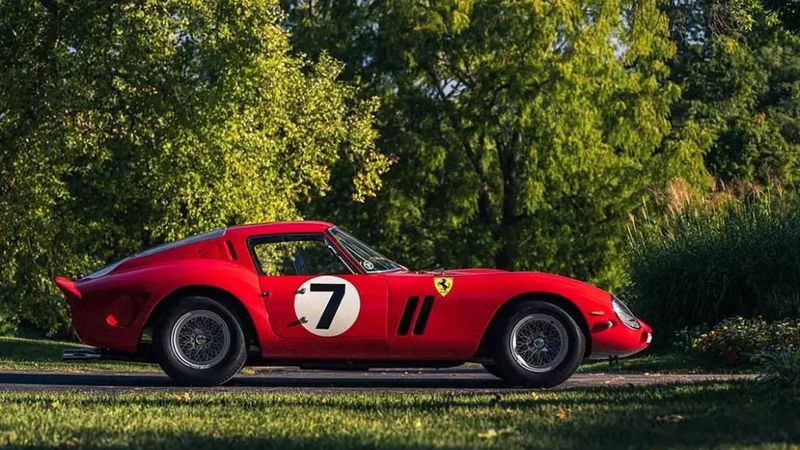
Ferrari at Auction - Predicting the Next Classic Car Spike
What a public saleroom does to a price — the mechanism the exit above depends on.
Read more →
Why Classic Cars Still Outpace Traditional Investments
The newsroom's most-read piece on the category. Editorial, and its comparisons are its own.
Read more →Collector cars, answered
Can an ordinary investor really own a collector car?
Does the car pay me anything while it is held?
Who pays for storage, insurance and maintenance?
Where is the car kept, and does anyone drive it?
What decides what a collector car is worth?
How would the car eventually be sold?
Do I need to be an accredited investor?
Can I sell my shares?
Could I lose everything?
Be first to know what’s next
New assets. New opportunities. New ways to invest. Join the aShareX list and hear about upcoming offerings before they launch.
Own a car you’re thinking of raising against? See how selling works →